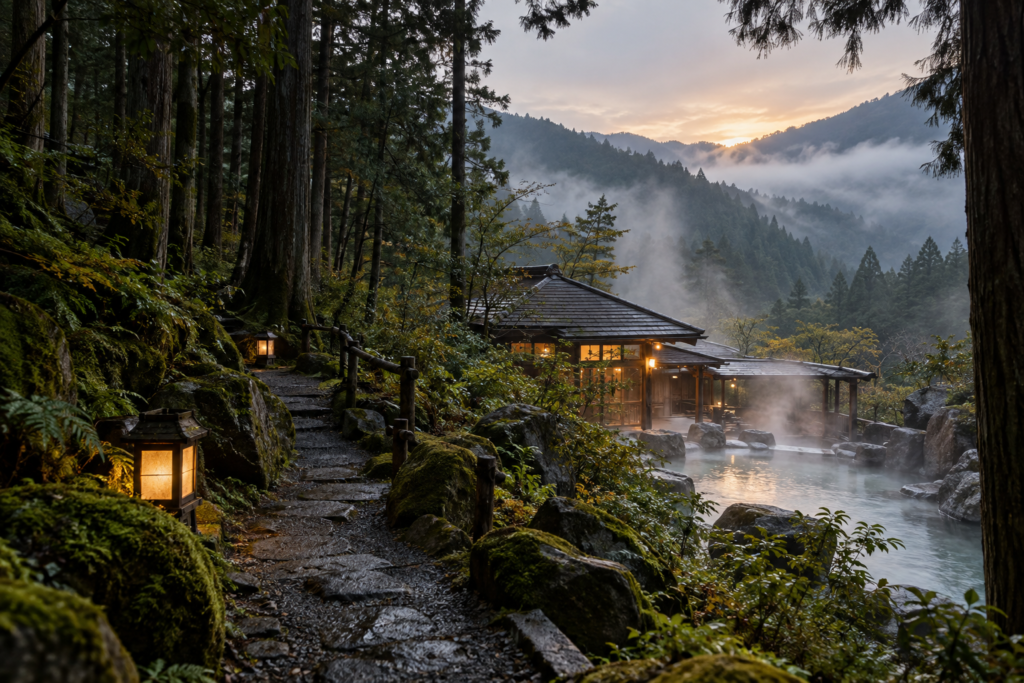
Hakone is better when you do not try to see everything at once.
There is the mountain train, the scent of sulfur drifting through a volcanic valley, cedar-lined paths, open sky above the lake, and a hot bath at the end of the day. Much of Hakone’s appeal lies not in the number of sights, but in the time spent moving between them.
This two-day itinerary is for travelers who want to leave Tokyo by public transport and spend unhurried time with nature, onsen and culture. It deliberately leaves room to walk, pause and do very little at a ryokan.
Who this journey is for
- Travelers looking for a one-night nature escape from Tokyo
- Visitors who do not want to rent a car
- People who prefer a quiet walk to a packed sightseeing schedule
- First-time guests at a Japanese onsen or ryokan
- Travelers interested in forests, a lake, local food and hot springs
Hakone is connected by mountain railway, cable car, ropeway, buses and sightseeing boats. Its main areas can be reached without a car, but mountain travel takes longer than moving around a flat city. The first rule of a slow Hakone journey is simple: leave more time than you think you need.
Getting to Hakone from Tokyo
Hakone-Yumoto Station is the main gateway. From Shinjuku, the Odakyu route takes roughly 90 minutes. The Limited Express Romancecar offers reserved seating, while regular trains suit travelers prioritizing cost. From Tokyo Station, another option is the Tokaido Shinkansen to Odawara followed by the Hakone Tozan Line.
If your route uses several forms of transport, compare individual fares with the Hakone Freepass. Check the latest price and included services before purchasing.
Day 1 — Slow down as you enter the mountains
Morning: Arrive at Hakone-Yumoto
Leave Tokyo in the morning and arrive at Hakone-Yumoto before noon. Instead of transferring immediately, take a short walk near the river and shopping street. Give yourself time to notice the shift from the city to the mountains.
If you have a large suitcase, check luggage storage or delivery options in advance. A small bag is much easier on mountain transport and crowded buses.
Midday: Take the mountain railway toward Gora
The Hakone Tozan Railway turns transportation into part of the journey. The landscape changes as the train climbs through wooded slopes and valleys.
Depending on your interests, stop at the Hakone Open-Air Museum or continue into the Gora area. If you choose the museum, allow enough time for its outdoor works and mountain setting. Otherwise, use the afternoon for a short walk or a quiet café instead of replacing it with three more attractions.
Late afternoon: Check in early
The value of staying overnight in Hakone is not simply having more sightseeing hours. It is being free to stop sightseeing before evening. Ryokan dinners and final check-in times may be fixed, so confirm them when booking and plan to arrive by late afternoon.
At an onsen, wash before entering the bath and keep your towel out of the water. Tattoo policies vary. If necessary, look for a reservable private bath or a room with its own bathing facilities.
Day 2 — Lake, volcano and forest
Morning: Remove one thing from the schedule
If your stay includes breakfast or a morning bath, do not rush out. Owakudani, Lake Ashi and Hakone Shrine can anchor the day, but weather and transport conditions may change the experience. Treat them as choices rather than obligations.
Owakudani or a quieter nature walk
Owakudani offers a close view of Hakone’s volcanic landscape and rising steam. Volcanic gases can affect some visitors, including people with respiratory or heart conditions, so check official warnings before going.
For a quieter alternative, consider the nature trail around the Hakone Visitor Center. The official national park guide describes a circular route of roughly 2 kilometers and 50 minutes. Check the season, weather and trail conditions, and wear suitable shoes.
Leave space around Lake Ashi
Around Lake Ashi, you can combine a sightseeing boat, a lakeside walk and Hakone Shrine. Mount Fuji is never guaranteed to appear. A cloudy view does not make the journey a failure. The lake light, cedar forest and path toward the shrine are part of the place in their own right.
The route I actually took
I traveled with Odakyu’s Hakone Freepass. It let me connect the Hakone Tozan Railway, cable car, ropeway, Lake Ashi sightseeing cruise and local bus without buying a separate ticket each time. It was convenient, and for my journey it also worked out cheaper than paying separately.
I followed the classic sightseeing loop: Hakone-Yumoto → Gora → Sounzan → Owakudani → Togendai → Lake Ashi → Moto-Hakone → Hakone-Yumoto. The final leg from the lake back to the station was by bus.
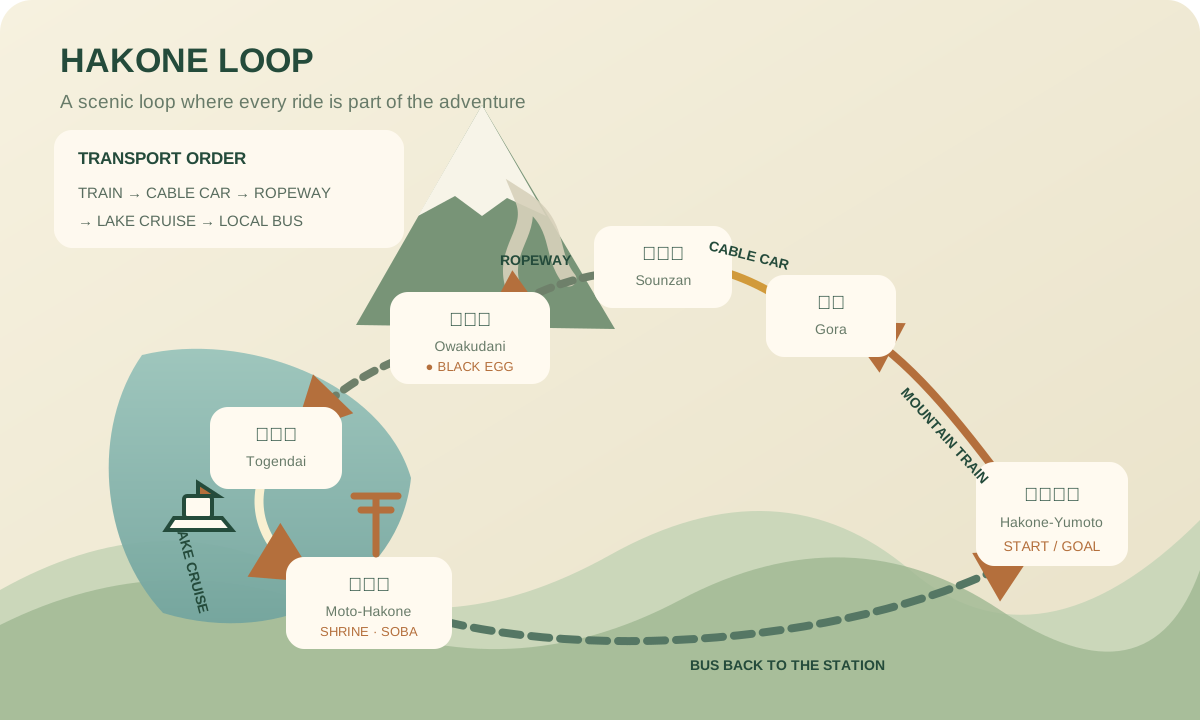
The ropeway did not feel like transport alone; it was an activity in itself. I enjoyed floating above the mountain as the scenery changed into Owakudani’s rough volcanic landscape.
I also tried the famous black egg. A local legend says that eating one adds seven years to your life. It is folklore rather than a health promise, but it makes a memorable Hakone story.
The ship from Togendai was fun too. After several mountain connections, moving slowly across Lake Ashi changed the rhythm of the day. Around Moto-Hakone, I walked toward the Hakone Shrine area and stopped for soba. Sitting down for something warm was part of the pleasure of the route, not merely a lunch break.
Carry some cash. The Freepass covered the included transport, but a soba restaurant or small local shop may not accept your preferred card. Weekend and evening road traffic can also delay the bus back to Hakone-Yumoto.
Where to stay
Hakone-Yumoto
Convenient for arrivals from Tokyo and well suited to first visits or shorter stays. Choose it when simple arrival and departure matter most.
Gora
Useful for museums and connections toward the higher mountain areas. It suits travelers combining art, onsen and mountain atmosphere.
Lake Ashi
Best for travelers who want the lake and Hakone Shrine nearby in the quieter morning or evening hours. Check transport and dinner arrangements before booking.
Do not compare accommodation by price alone. Check the nearest stop, shuttle service, dinner time, bathing rules and luggage support.
What to pack
- Comfortable shoes with reliable grip
- Layers for changing mountain temperatures
- A small towel and light rain protection
- A portable battery
- Some cash and an IC transit card
- Offline screenshots of accommodation and return information
The simplest way to improve this journey
You do not need to add another attraction. Remove one.
Choose two or three places that genuinely matter to you. Leave space around the bath, meal and journey between them. Build a plan that still works if Mount Fuji remains behind clouds or mountain transport changes.
Hakone may be one of the easiest nature escapes from Tokyo, but proximity is not a reason to rush. Slow down as you enter the mountains, and the transportation itself becomes part of the trip.